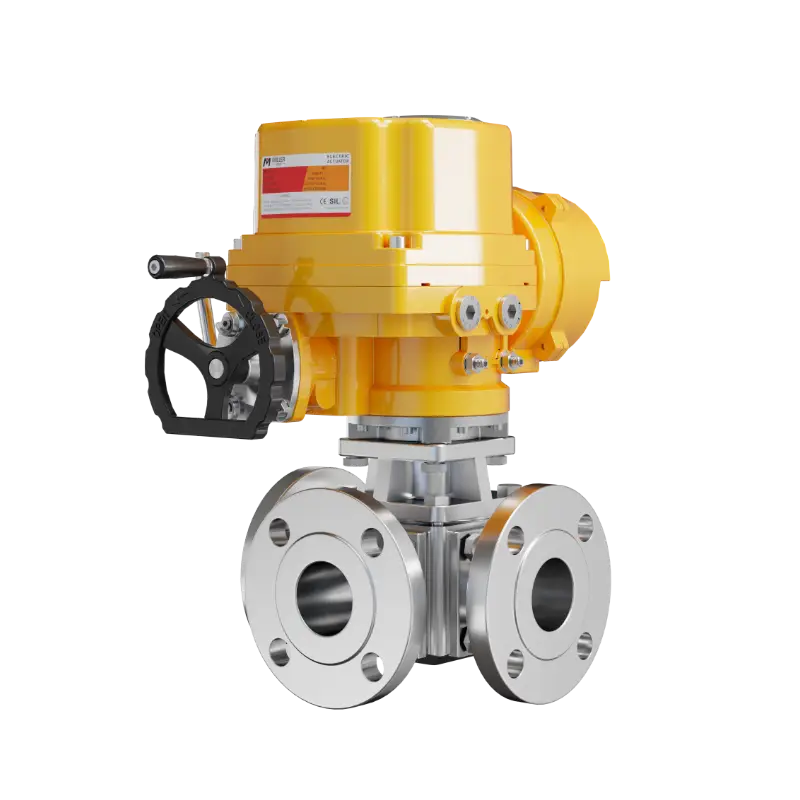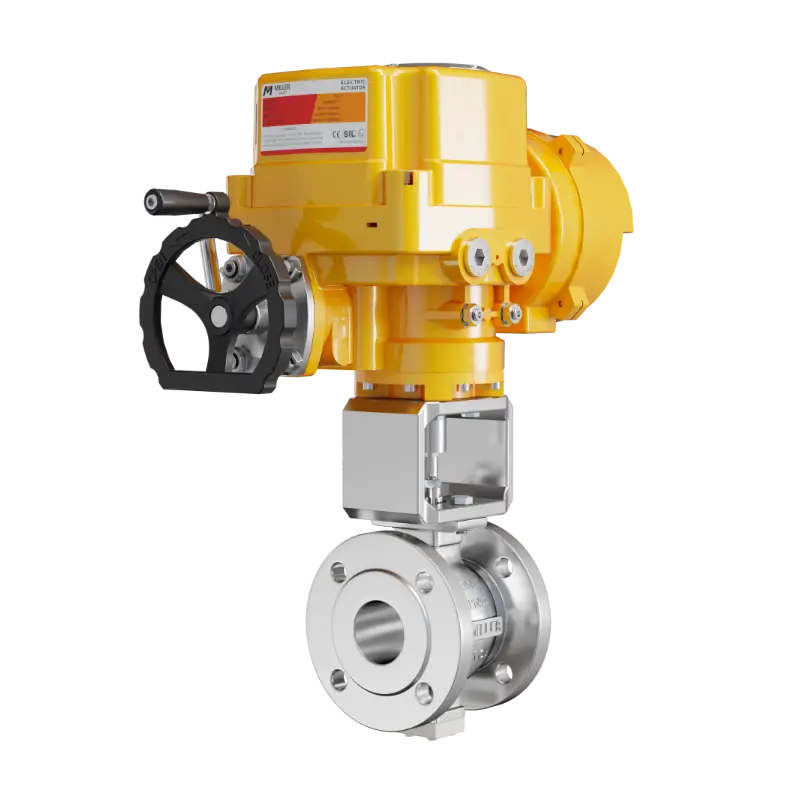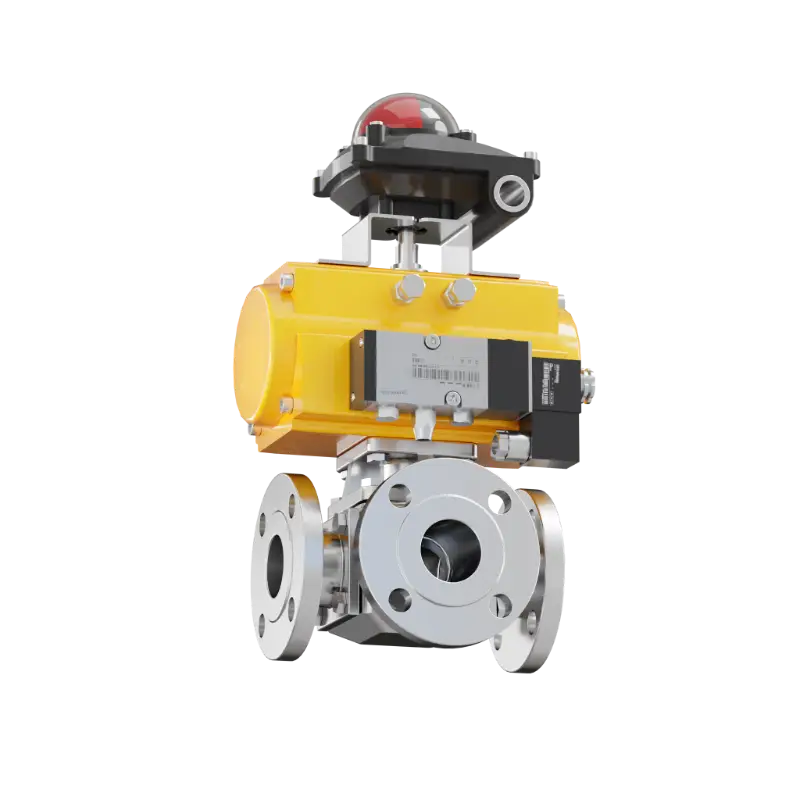
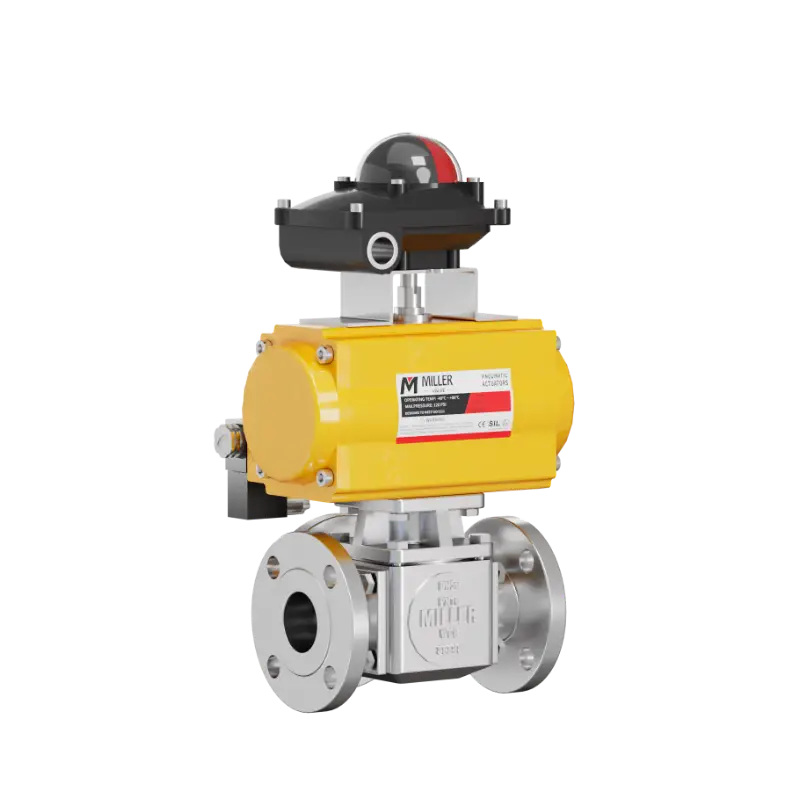
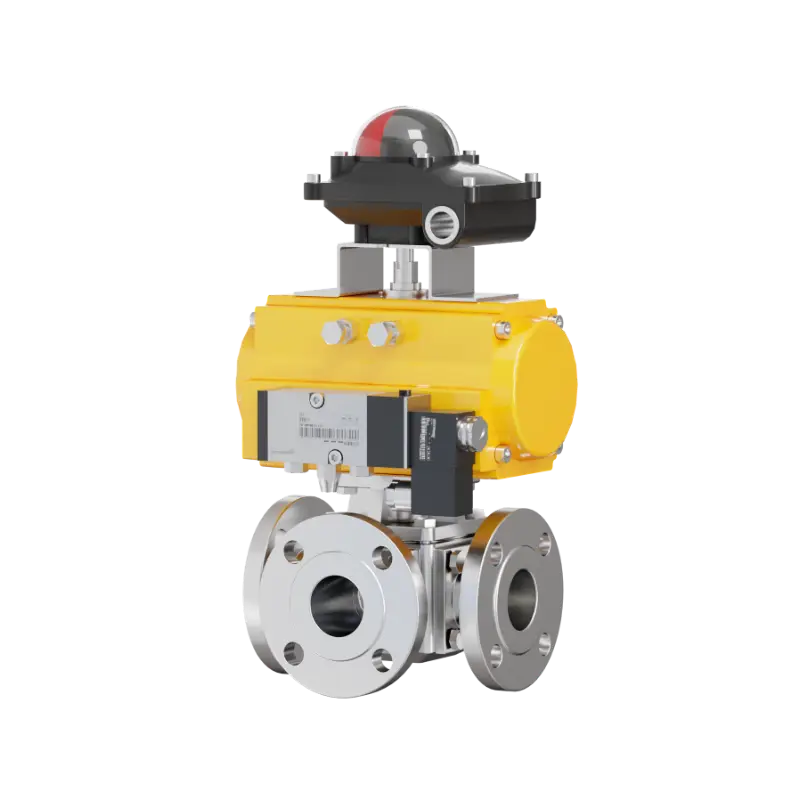
KB50T
Pneumatic Three-Way Ball Valve
Design Features
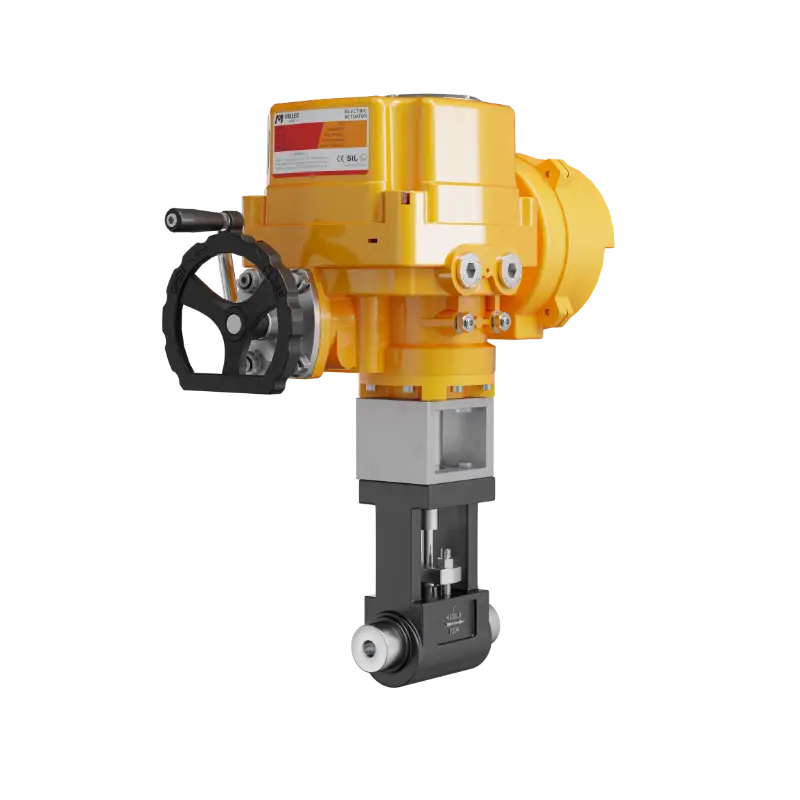
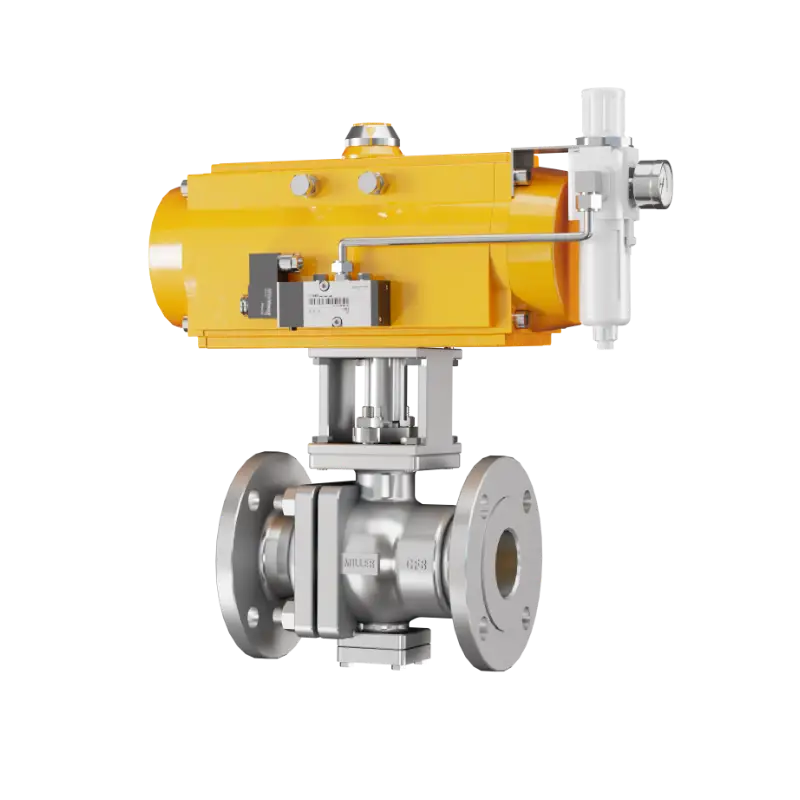
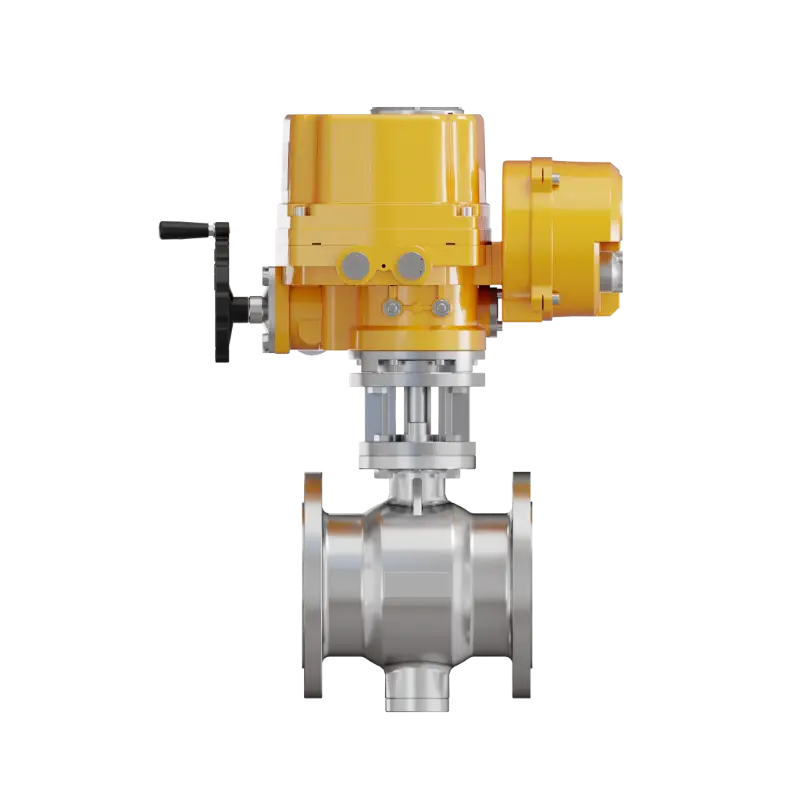
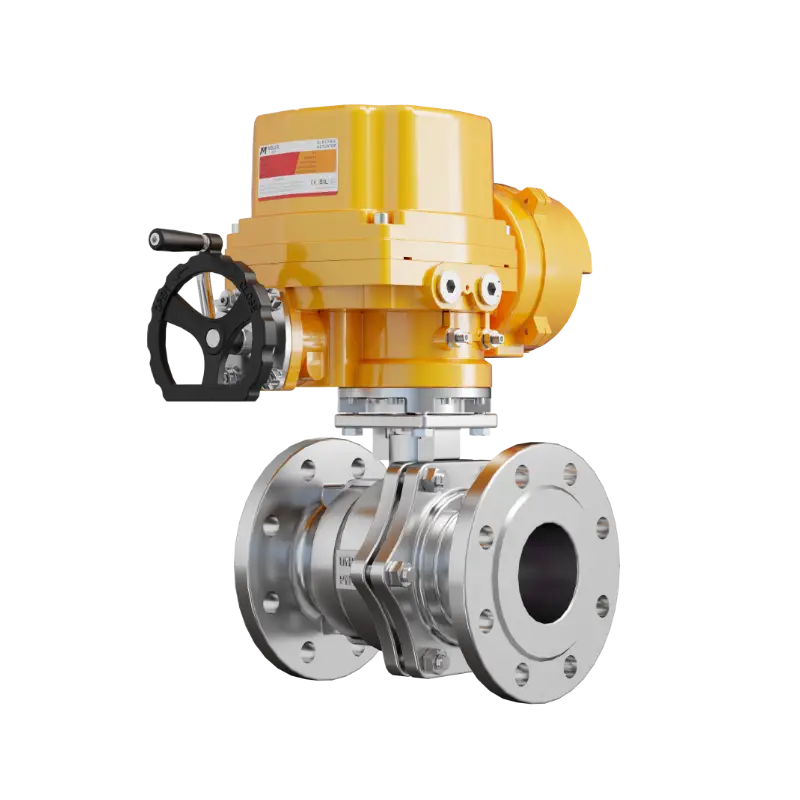
The pneumatic three-way ball valve features an integrated ball core design with L-type or T-type flow channels, enabling flow path switching, mixing, or diverting through ball rotation. It is equipped with a compact pneumatic actuator (with optional positioner integration for control functions) supporting 90° or 180° angular rotation. The valve seats feature reinforced PTFE or metal sealing, while the valve stem incorporates an anti-blowout stem design to enhance sealing reliability under high-pressure conditions.
Contact us
| Product Name | Pneumatic Three-Way Ball Valve |
| Model Number | KB50T |
| Nominal Diameter | NPS 1/2" ~ 12" (DN15 ~ DN300) |
| Pressure Rating | Class 150 ~ Class 2500 (PN16 ~ PN420) |
| Body Material | Carbon Steel (A), 304 Stainless Steel (S), 316 Stainless Steel (L), Inconel, Monel, Hastelloy, Titanium (Ti), etc. |
| Bonnet Type | Standard Bonnet, Extended Bonnet (for cryogenic or high-temperature service) |
| Seal Material | PTFE, Metal-to-Metal Seal, Hard Alloy (Stellite or Tungsten Carbide) |
| Leakage Class | ANSI Class VI (Bubble-tight Seal) |
| Medium Temperature | -196℃ ~ 800℃ |
| Connection Type | Threaded (NPT/BSP, Type 1), Butt-Weld (BW, ASME B16.25, Type 2), Flanged (ASME B16.5, Type 4) |
| Trim Configuration | T-Port (T), L-Port (L) |
| Control Accuracy | ±0.1% |
| Actuation Type | Pneumatic Actuator |
| Air Supply Pressure | 400–800 kPa |
| Air Inlet Port | G1/4", G1/8", G3/8", G1/2" (BSPT Thread) |
| Pneumatic Actuator | Optional (Double-Acting or Spring-Return) |
| Control Mode | On/Off Type (Two-Position Control), Modulating Type (4–20 mA Control) |
| Single-Acting Actuator | Air-to-Open (Fail-Closed, FC), Air-to-Close (Fail-Open, FO) |
| Double-Acting Actuator | Air-to-Open / Air-to-Close (Fail-Locked, FL) |
| Optional Accessories | Positioner, Air Filter Regulator, Lock-up Valve, Limit Switch Box, Valve Position Transmitter, Handwheel Operator, Solenoid Valve |
| Stroke (°) | 0° ~ 90° |
| Remarks | Other special seal materials or temperature requirements can be customized according to customer specifications. |